New manuscript: A non-classical motional state of a microparticle

A new preprint from our lab on the arxiv: Macroscopic Quantum Interference of the Center-of-Mass Motion of Levitated Superconducting Microparticles enabled by Magnetic Higher-Order Traps

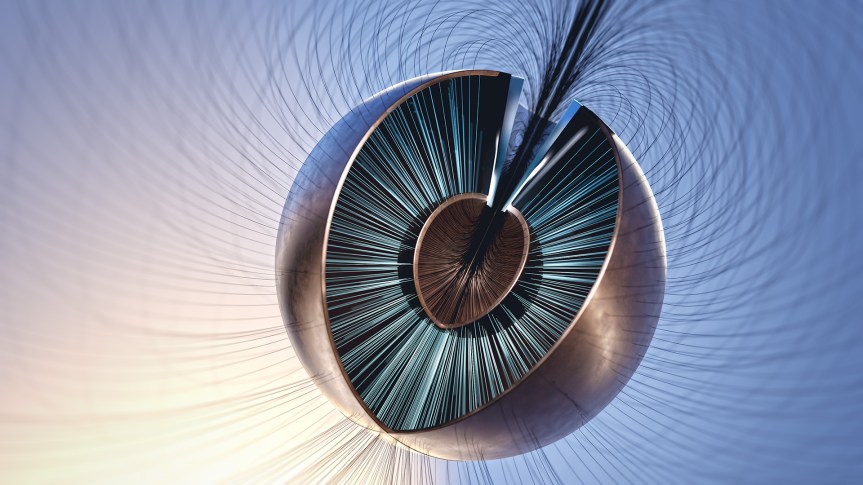
A long title – but a short message: In this collaborative theory work we outline how one can observe a non-Gaussian motional state of a magnetically levitated superconducting microparticle. We show a clever way of how magnetic fields can be used to generate desired nonlinear potentials, including a double-well or a Duffing potential. The motional state of the superconducting microparticle evolves dynamically in such a potential for a short amount of time. We can show theoretically that non-Gaussian states of the particle’s center-of-mass motion can be generated in such a way and that quantum features of these states can also be verified.

Our work unites desirable features of a future experiment to generate non-classical states of the motion of microscopic objects: (i) long coherence time due to the use of superconducting magnetic levitation, (ii) dynamic state evolution in nonharmonic potentials that realize a nonlinearity on the length scale of hundred times the zero-point motion of the particle, which is about 100 picometer, and (iii) stationary trapping of the same microparticle allowing for repeated experiments to acquire sufficient statistics.

We know now in principle that it may work – the experiment will still be hard to perform.

Thanks for the great collaboration with the groups of Carles Navau, Sofia Qvarfort and Anja Metelmann, and the major drivers of this work: Fabian Resare, Jaume Cunill-Subiranas, and Suocheng Zhao.

Congrats Achintya!

Big congrats to Achintya who successfully graduated with a PhD last Tuesday! You can have a look at his PhD thesis here.

Achintya pursued his project within our magnetic levitation team whose goal is to observe quantum behavior in the motion of a magnetically levitated superconducting microsphere. Still a long journey to go.

Achintya brought us a step closer. His project resulted in flux-tunable superconducting resonators, which we are going to use to measure the particle’s motion. Soon!

Thanks a lot for all your wonderful engagement! It was a great journey together.

Theory that feeds into our experiments

Our theory collaborators, both for the optomechanics and the levitation experiments, have uploaded new works to the arxiv.

Lei Du, together with Juliette Monsel, from Janine Splettstoessers group has outlined the theory how to create nonclassical optomechanical states in a Fano-optomechanical microcavity system, see here. This work serves as an inspiration for our ongoing efforts in achieving nonlinear optomechanics.

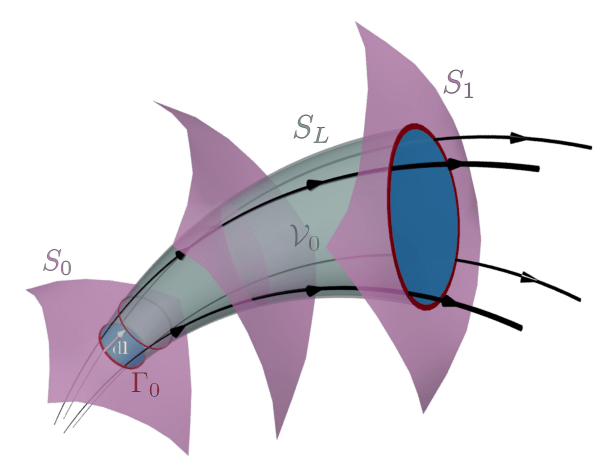
Jaume Cunill-Subiranas, together with Natanael Bort-Soldevila, from the team of Nuria Del-Valle and Carles Navau have shown how to create any magneto-static field using an arrangement of superconductors, high permeability materials and an arbitrary magnetic field source. We, in particular Fabian Resare from our lab, have contributed to this work with a proof-of-principle experiment demonstrating the feasibility of the suggested approach. Interested? Look here.

Tuning of flux tunable superconducting resonators

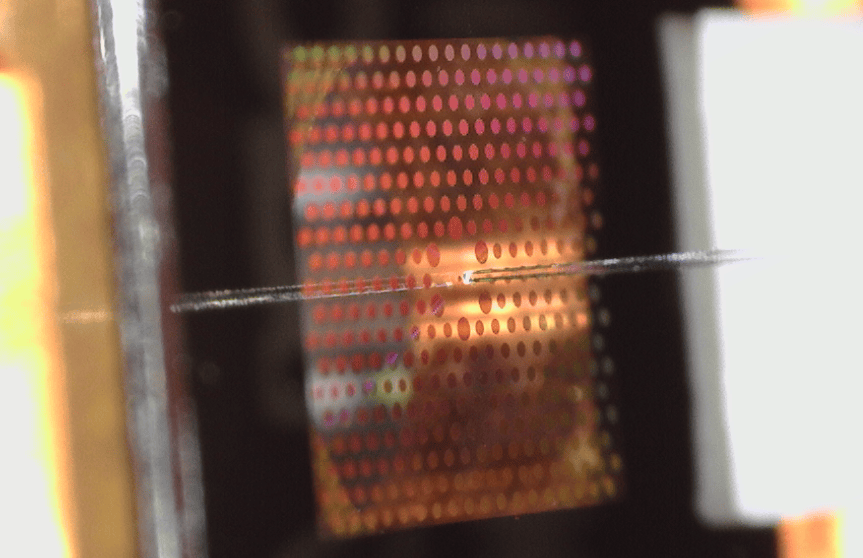
Our lab’s first flux-tunable superconducting resonators are now on arXiv. We show how one can efficiently modulate these FTRs using chip-based modulation techniques. This work is part of our group’s efforts to generate macroscopic quantum states of levitated superconducting microparticles.

Thanks to the efforts from our group by Achintya Paradkar (main actor!), Paul Nicaise, Karim Dakroury and Fabian Resare, and by our co-workers from the EU project SuperMeQ Christian Dejaco, Lukas Deeg and Gerhard Kirchmair.

I want to also thank Amr Osman, Anita Fadavi and Jonas Bylander for the strong support in microfabrication we have received at the Quantum Technology lab at Chalmers Department of Microtechnology and Nanoscience at Chalmers University of Technology.

Welcome Aditi!

We welcome Aditi to our lab, who joins the maglev team as a PhD student. She will research on the read-out and control of levitated superconducting microparticles based on superconducting circuit technology. This will be much fun!