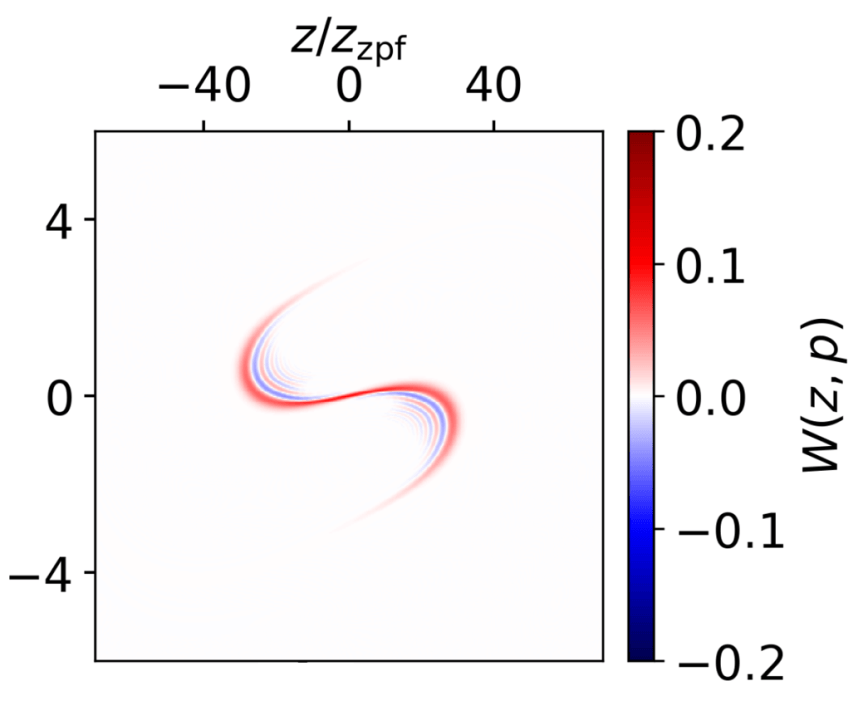
Dynamic state evolution in a nonlinear potential

How do we create and verify a non-classical state of a 1 micrometer-sized superconducting particle? In theory, it should work. We use a clever arrangement of coils to generate nonlinear magnetic trap potentials. The superconducting particle is trapped in these and dynamically evolves into a non-classical state.

All details you find in our work published in Quantum Science and Technology.

Fantastic work jointly lead by Jaume Cunill-Subiranas and Fabian Resare with great input from Soucheng Zhao, Sofia Qvarfort, Anja Metelmann, and Carles Navau. Again, a great team work of the EU project SuperMeQ!
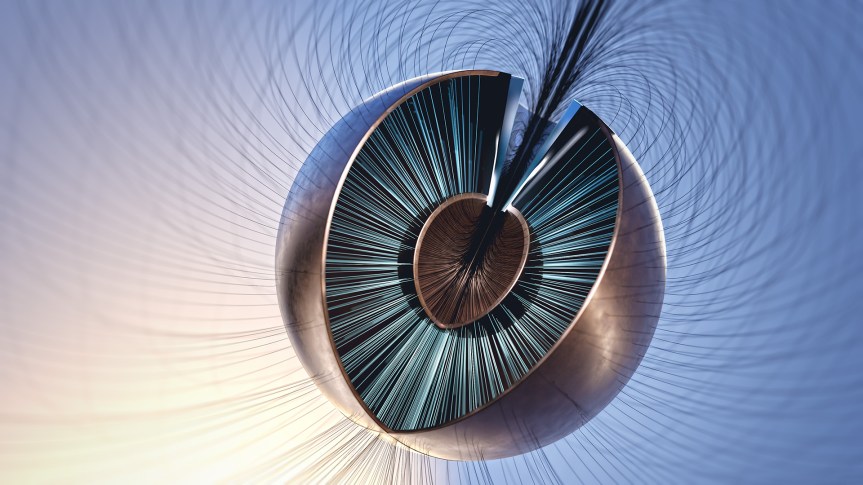
Magnetic omniconversion

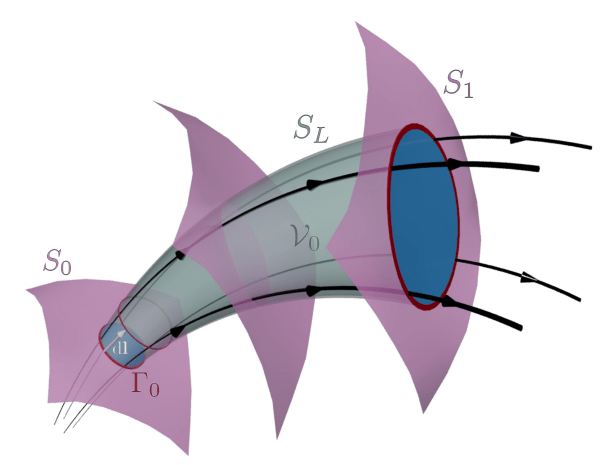
Our joint work on “Magnetic omniconversion: Source-independent molding of magnetostatic fields” has been published in Science Advances!

This work introduces a general method to shape magnetic fields independent of their magnetic sources. Our colleagues from UAB Barcelona developed the theory and we validated it experimentally. A wonderful collaboration within the EU project SuperMeQ! Thanks to Jaume, Fabian, Natanael, Nuria and Carles!

You can read an accessible news article about our work here.

Theory that feeds into our experiments

Our theory collaborators, both for the optomechanics and the levitation experiments, have uploaded new works to the arxiv.

Lei Du, together with Juliette Monsel, from Janine Splettstoessers group has outlined the theory how to create nonclassical optomechanical states in a Fano-optomechanical microcavity system, see here. This work serves as an inspiration for our ongoing efforts in achieving nonlinear optomechanics.

Jaume Cunill-Subiranas, together with Natanael Bort-Soldevila, from the team of Nuria Del-Valle and Carles Navau have shown how to create any magneto-static field using an arrangement of superconductors, high permeability materials and an arbitrary magnetic field source. We, in particular Fabian Resare from our lab, have contributed to this work with a proof-of-principle experiment demonstrating the feasibility of the suggested approach. Interested? Look here.